Menu
Description

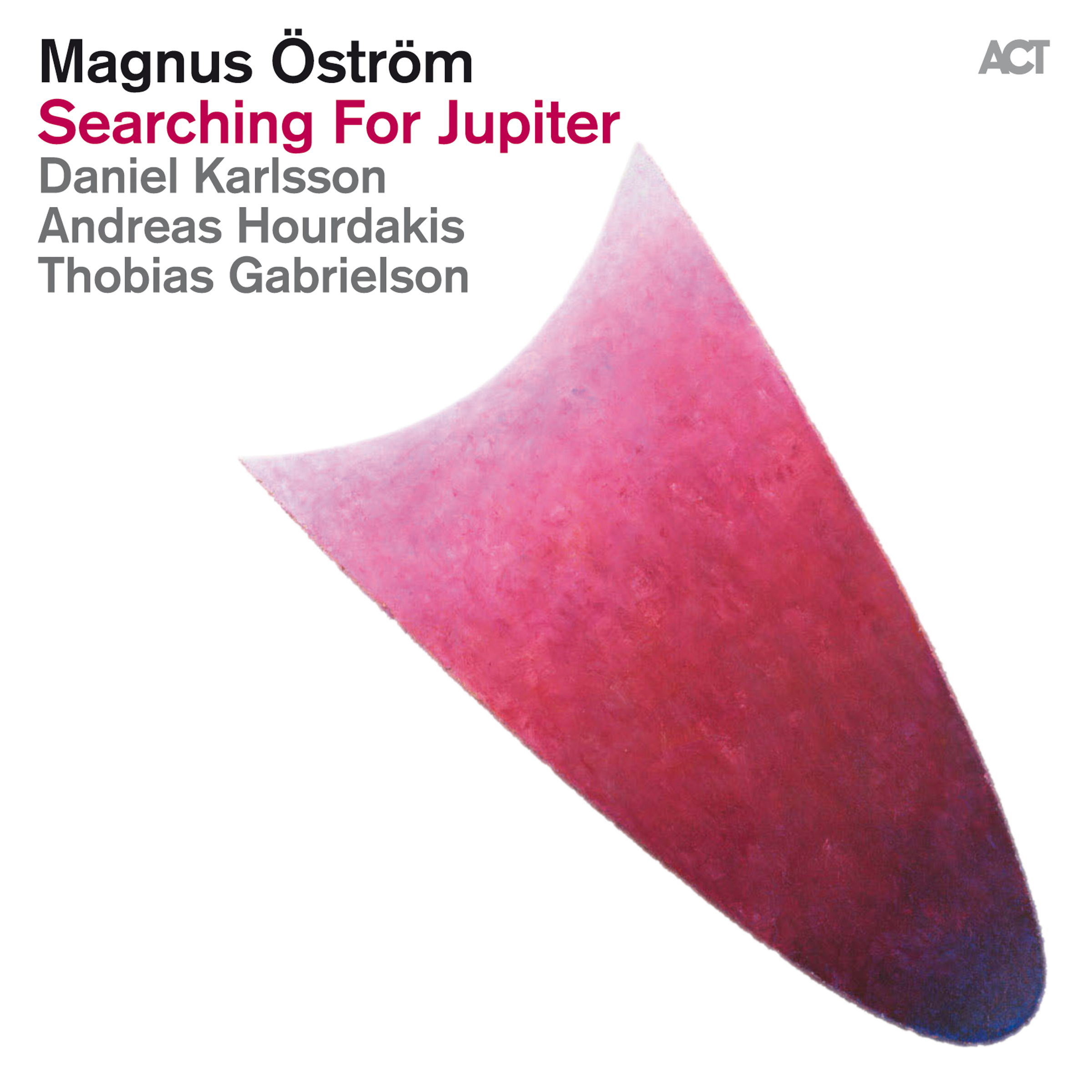
Magnus Öström - Searching For Jupiter

CD / Vinyl / digital

Magnus Öström drums, percussion, voice, additional keys 
Andreas Hourdakis electric and acoustic guitars, banjo 
Daniel Karlsson grand piano and keyboards 
Thobias Gabrielson electric bass and bass synthesizer, keys, a.o.

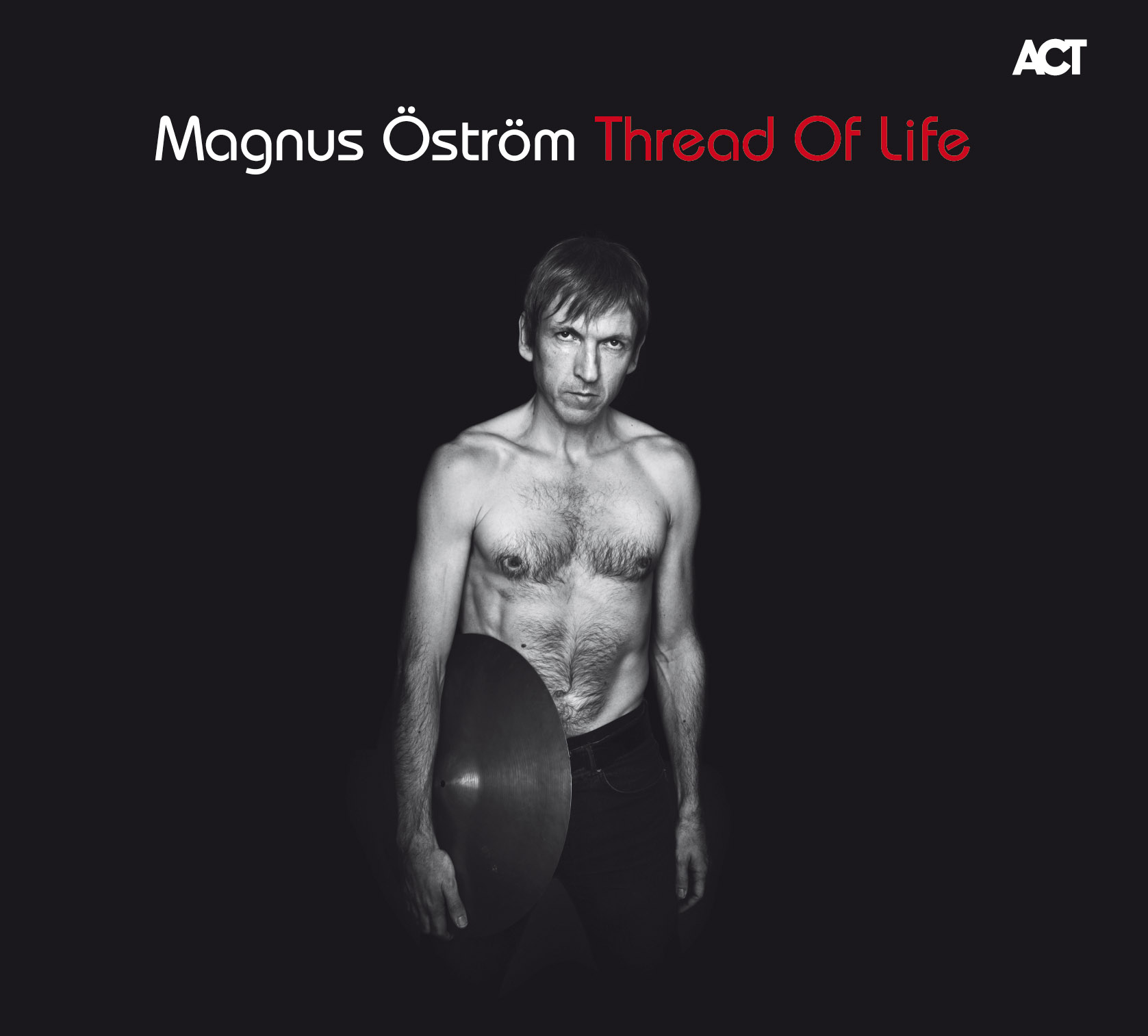
Jupiter was the King of all the Gods for the Romans: the Heavenly Father, the bringer of light. It was him you invoked when the goddess of fate had unexpectedly intervened in your life. So it was with the Swedish drummer Magnus Öström, who was dealt a stroke of fate almost five years ago when his close friend, the pianist Esbjörn Svensson, was killed in an accident. They had revolutionised the jazz world since 1993 with e.s.t. - the Esbjörn Svensson Trio. It took two years for Öström to find his way back to music after that tragic event, and to bring out his first own album: "Thread of Life". It is a work of mourning, adorned with melancholy, that seeks its own path, falling back on art-rock and electronic elements and a closer link to sounds than melodies. "A jazz band that bathes in rock with everything it has" is what Jazz thing heard on this album. Which also proves how important Öströms incomparable drumming is for the e.s.t. style – as precise as a metronome, and yet with a feverish groove and surprising use of the brushes. It was so impressive in doing so, that Öström won the 2012 Echo Jazz Award for Best International Drummer. BBC Radio 3 said of Öströms post-e.s.t. oeuvre on ACT: "What an utterly beautiful and compelling album this is. The playing is immaculate, the compositions truly inspired, the arrangements magical." And the German rock magazine eclipsed gushed: "Here, a musician has transcended himself in a gigantic apotheosis." Öström now presents his follow-up "Searching For Jupiter". His loss is still palpable in heavy, yearning tracks like "Mary Jane Doesn't Live Here Anymore" or "Hour Of The Wolf", but Öström has taken some decisive steps forward: He now has a strong and tight band together with guitarist Andreas Hourdakis, bassist Thobias Gabrielson and pianist Daniel Karlsson, who is well known from the jazz-fusion band Oddjob. They have rigorously pursued a jazz rock and progressive rock leaning - "The Moon (And The Air It Moves)", for example, is reminiscent of Pink Floyd not only in name, and there is more optimism again: Melodies once again play an important role ("Dancing At The Dutchtreat"), even major-key cheerfulness shines through from time to time ("Happy And The Fall"), and the album ends with an anthem of hope with "At The End Of Eternity".


Credits:
All songs composed and produced by Magnus Öström 
Recorded by Janne Hansson at Atlantis Studio, Stockholm, January 28 - February 1, 2013 
Additional recordings by Magnus Öström at Islandstream Studios in February 2013 
Mixed by Åke Linton at Bohus Sound Recording, Gothenburg, February 14 - 19, 2013 
Mastering by Classe Persson at CRP Recording, March 6, 2013 
Cover art, "Segesta II", 2004 by Raimer Jochims, courtesy Johnen Galerie, Berlin

Artists: Magnus Öström
Format: CD
Land: Scandinavia
Manufacturer information

ACT Music + Vision GmbH & Co.KG
Hardenbergstr. 9
D-10623 Berlin

Phone: + 49 - (0) 30 310 180 10
E-Mail: info@actmusic.com

Magnus Öström

Tip
Magic Moments 17 "In The Spirit Of Jazz"
The famous compliation "Magic Moments", curated by Siggi LochTracklist: 01 Elevation of Love // Album: e.s.t. 30 Magnus Öström, Dan Berglund, Magnus Lindgren, Joel Lyssarides, Verneri Pohjola, Ulf Wakenius 02 Second Nature // Album: Life Rhythm Wolfgang Haffner03 Raw // Album: raw Nils Landgren Funk Unit 04 The Answer // Album: The Answer Jakob Manz 05 Shots // Album: Bloom Bill Laurance 06 Das Handtuch // Album: Tough Stuff Iiro Rantala 07 She’ll Arrive Between 10 & 11 // Album: Guitar PoetryMikael Máni 08 Terrible Seeds // Album: While You Wait Little North 09 Se Telefonando // Album: Ennio Grégoire Maret, Romain Collin 10 Wonderland // Album: Wonderland Daniel García Trio 11 Fresu // Album: Inner Spirits Jan Lundgren, Yamandu Costa 12 Hands Off // Album: Stealing Moments Viktoria Tolstoy 13 Hidden Prelude // Album: What the Fugue Florian Willeitner 14 Pralin // Album: Let Them Cook Emile Parisien 15 My Brother Rolf // Album: Komeda Joachim Kühn 16 Passacaglia // Album: Passacaglia Adam Bałdych, Leszek Możdżer 17 Linden Tree Rag // Album: Rag Bag Bernd Lhotzky 18 Zafeirious Solo // Album: Arcs & Rivers Joel Lyssarides, Georgios Prokopiou

From €9.90*
e.s.t. 30
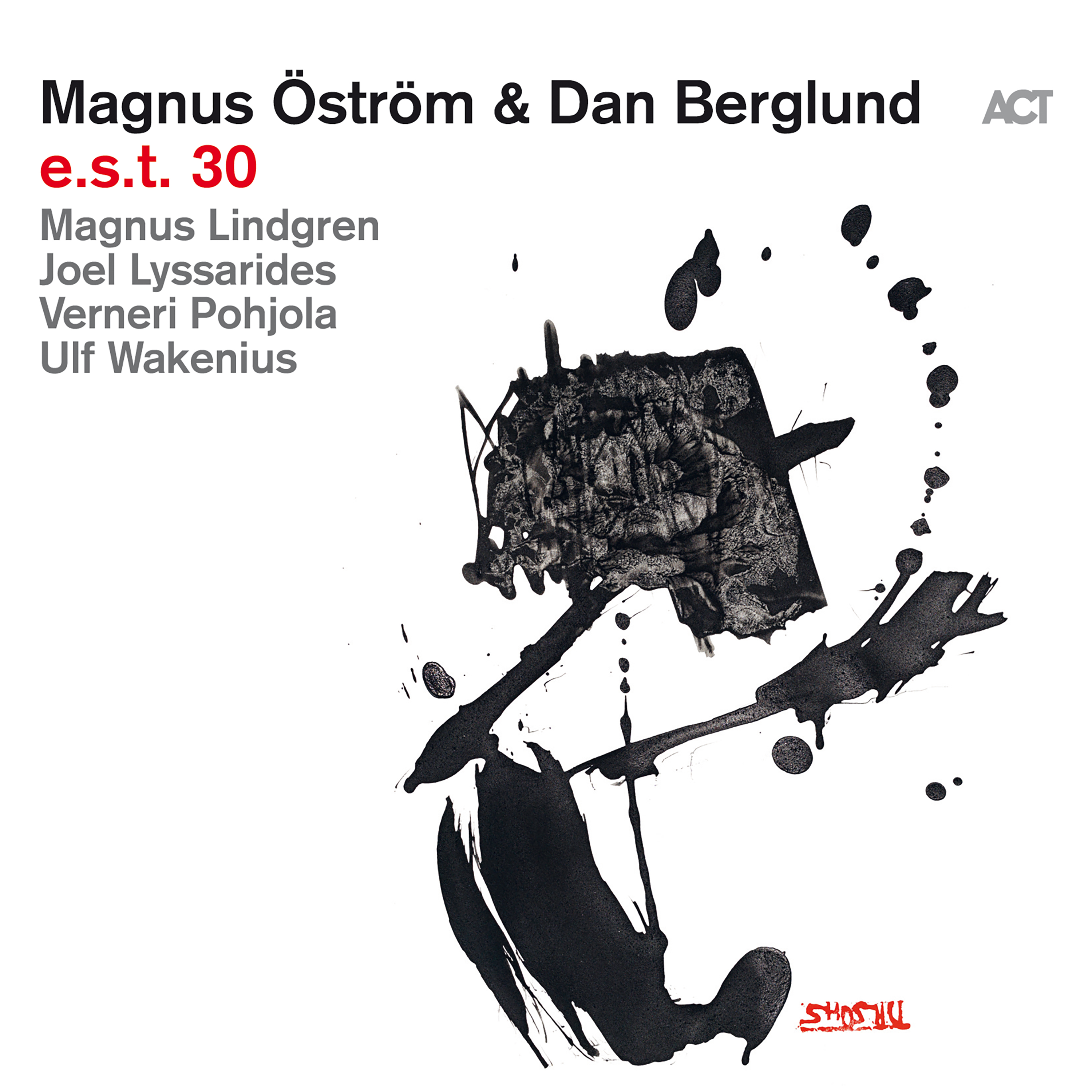
Magnus Öström - e.s.t. 30CD / Vinyl / digital Magnus Öström drums Dan Berglund double bass Magnus Lindgren tenor saxophone, flute Joel Lyssarides piano Verneri Pohjola trumpet Ulf Wakenius electric guitar Love remains... In 1993, three musicians from Sweden, Esbjörn Svensson, Dan Berglund and Magnus Öström formed the band e.s.t.. Svensson and Öström had known each other ever since their first steps into music as children. Neither of them could have anticipated that e.s.t. would become the most influential band in European jazz of the noughties. And when the band formed they probably didn't think they were particularly ‘jazz’ either; all they wanted to do was to play the music which united their passions: rock, pop, classical, folk, improvisation. In the following 15 years, e.s.t. would play thousands of concerts worldwide, release ten studio albums and several live recordings, win awards, gold discs. We all know how the story ends. Or did it really end? And will it ever end? To mark the 30th anniversary of e.s.t., Magnus Öström and Dan Berglund combined forces with close musical friends Joel Lyssarides, Magnus Lindgren, Verneri Pohjola and Ulf Wakenius to give two major concerts, one at the Kölner Philharmonie and other at the Filadelfia church in Stockholm. They played a selection of quintessential pieces from the timeless e.s.t. repertoire, but in a way that has never been heard before. The six musicians, each one a solo artist of international renown, treat the original melodic and rhythmic contours of these tunes with tenderness and affection. The iconic melodies and rhythms are all there, but we also hear how they are opened up again and again, as the musicians immerse them in unexpected warmth and light. These players react to each other in fascinating ways, and there is also a definite tingle in the air as the audience listens to the music in pin-drop silence, then bursts into uninhibited applause atthe end. Magnus Öström reflects on how it feels to play this music today: “The emotions we experience have many layers, the depth of a lifetime. Firstly, it feels like coming home. There is sadness, gratitude, and happiness. And it seems unreal or even surreal and ever so natural at the same time. And you can't stop marvelling at how great this music is. Esbjörn’s compositions and the arrangements that we did together as a trio back then, feel timeless.” And he concludes: “In the end, what remains above all is the conviction that this music should be played and not lying around in a drawer.”“e.s.t. 30” zooms in from the widest of panoramas to the intimacy of the close-up. And from the total silence and weightlessness of space in the opener "From Gagarin's Point Of View" to the heartfelt sincerity of the final track "Believe, Beleft, Below", or as it is called in the later version with vocals: "Love is Real". “If we meet again, I'd tell you how I feel, I'd tell you from the start, I'd tell you love is real.” Love remains.

From €18.00*
e.s.t. Live ‘95
Esbjörn Svensson Trio e.s.t. - e.s.t. Live 95CD / Vinyl / digital Esbjörn Svensson piano Dan Berglund bass Magnus Öström drums They have been lauded as the "New sound in the Old World", and as "high voltage out of Sweden"; the group has been called "possibly the best jazz trio in the world". The Esbjörn Svensson Trio's - known as EST - rise to the heights has been almost frightening. After their first major success in Sweden, their international breakthrough came in 1999 during the ACT World Jazz Night at the Montreux Jazz Festival. In the following years EST was a sensation throughout Europe, and they are now on the path to continuing their success story in the USA. It's no wonder that, especially when playing "live", EST lets loose an almost unbelievable energy - and this energy appears to grow from tour to tour - a rising star that shines ever brighter. Stars sometimes shine much longer than one would think. And here are recordings that demonstrate this is true for EST. The band, which was first formed in 1993, quickly found their very special sound. However, at first, no one outside EST's homeland was aware of them. Six years ago, in 1995, when Esbjörn Svensson still had long hair, and wore a headband, a record titled "Mr. And Mrs. Handkerchief", which consisted of live air shots from various towns in Sweden, was released. A year later, EST recorded the album "Esbjörn Svensson Trio Plays Monk" (recently re-released as ACT.). It reached the undreamed of sales of 10,000 CD's nationwide. Those who have heard how the trio played back then can attest that it was breathtaking music (for a quick listen: track 5).Much of what characterizes EST's play today was already well-defined in 1995: the unity and riveting strength of the inter-play, the compelling themes - themes that immediately jump out at the listener, and yet are never burdened with cliches. Then there are the musical influences of the likes of Thelonious Monk and Kieth Jarrett, which are fused into a unique style that is again and again infected by the forward-thrust of rock. Magic moments are preserved for posterity in these live takes. In tracks three and seven, Svensson plays on an upright piano that doesn't even come close to the brilliance and clarity of a concert grand - and yet, these recordings are pearls. The trio had by this time mastered the ability to react spontaneously to the inspiration of the moment.Absolutely no difference from today? On their latest tours EST sounded tighter, less raw, with the impetuosity of wilder times more under control. Comparison with the masterpiece "Dodge the Dodo" from the 1999 Montreux concert (bonus CD) shows that the trio's development has not been by leaps and bounds, but has been a continual process. Esbjörn Svensson himself has stated most clearly how much the music from past periods influences the band; "Obviously we develop all the time, both as individuals and as a group. But development isn't only about blind process. So instead of just going forward, in places we've chosen to refer back to our earlier sound, to what we had on our first two albums." That's already reason enough to pay new attention to "EST LIVE '95". Roland Spiegel, translated by Marty Cook Credits: Recorded by Åke Linton in March 1995, except # 11 recorded by Manu Guiot at Montreux Jazz Festival July 16, 1999, # 5 by Per Åke Hermansson, Radio Dalama and # 6 by Verner Kjersgaag, DR Östjüllands Radio Mixed by Åke Linton at Bohus Studio Produced by e.s.t.

From €17.50*
e.s.t. Plays Monk
Esbjörn Svensson Trio e.s.t. - e.s.t. Plays MonkCD / Vinyl / digital Esbjörn Svensson piano Dan Berglund bass Magnus Öström drums Thelonius Monk was one of the truly great piano geniuses on the international jazz scene. Esbjörn Svensson is one of the truly great piano talents on the Scandinavian jazz scene. In EST, who previously has released some critically acclaimed albums – „From Gagarin´s Point Of View „(ACT 9005-2), „Winter In Venice“ (ACT 9007-2) and lately „Good Morning Susie Soho“ (ACT 9009-2) – we have Magnus Öström on drums, Dan Berglund on double-bass and, of course, Esbjörn Svensson himself, who was an infant when he practically learnt to walk to the sound of „In Walked Bud“. „My father was and is a great jazz lover. So I was very young when I first came in touch with Monk´s music. He is the kind of composer that cannot be avoided“, says Esbjörn Svensson. „Plays Monk“ is the telling title of the CD from 1996 by Esbjörn Svensson Trio (EST), now released on ACT. Ten of the most beloved songs by Monk, from nocturnal, lovingly caressing „`Round Midnight“ to the gay and sprightly „Rhythm-A-Ning“, gets here a becomingly shining new colour. The music of Thelonius Monk is a peculiar mixture of simplicity and and complexity; of larguorous ballads and rhythms turned inside out. The music is a challenge. „You can always give it your personal touch“, explains Esbjörn. On „Plays Monk“you notice this over and over again. Credits: Recorded by Åke Linton and Johan Ekelund at Swedish Radio, Studio 9, January 1996 Mixed by Johan Ekelund and Bernard Löhr Produced by Johan Ekelund

From €17.50*
e.s.t. live in London
Esbjörn Svensson Trio e.s.t. - Live in LondonCD / Vinyl / digital Esbjörn Svensson piano Dan Berglund bass Magnus Öström drums The release of this album marks a poignant moment: the tenth anniversary of the tragic and premature death of Esbjorn Svensson on 14 June 2008. During the last ten years after the end of e.s.t. there have been constant reminders of the indelible mark which the band has left on the international jazz scene. Indeed it is hard to imagine a whole generation of currently highly successful young bands all over the world, often attracting an audience of same age, without the deep and lasting influence of the sound and the aesthetic of e.s.t. It might sound like a cliché but it is evident that through his music, Esbjörn Svensson will stay with us forever. The trio really was a phenomenon. Its scale, recognition and impact grew progressively and internationally during the seventeen years of its existence. British audiences, for example, took e.s.t to their hearts, and in a special way. Things began quietly when they first performed one night in the tiny Pizza Express Jazz Club in Dean Street in the late 1990’s, and their footprint in the UK just kept growing steadily from there, until they were packing out concert halls. It is part of a similar story in many European countries. They were not just met with massive success in Germany and France, they truly went Europe-wide. And they also reached out further: they were the first European band ever to appear on the cover of Downbeat in May 2006, the magazine’s seventy-third year. In 2006, one year after „Live in London“ was recorded, they played over 100 concerts in 24 countries and were heard by 200,000 people. That unforgettable experience of e.s.t. playing live has been caught before on CD, notably in "Live in Hamburg", which was named the “Jazz album of the decade 2000–2010” by The Times, whose critic wrote: “In a decade when Scandinavia staked a claim as the home of progressive jazz, no one had more success than this piano trio.” Jamie Cullum described the appeal of their live concerts: „e.s.t. are a jazz trio, only I can take my non-jazz friends along to see them.”This new release was recorded at a completely sold-out Barbican Centre in 2005, during a hugely successful and highly popular UK tour. It is e.s.t. at the peak of their creativity touring after the release of their to-date best selling album “Viaticum”. The organic and natural way in which the set evolves is remarkable, and there is plentiful evidence of what Canadian critic John Kelman has called their “unique simpatico.” For people who know and remember the band well, the absolute gem here is a serene, deliciously poised account of “Believe, Beleft, Below.” The Independent’s critic Stuart Nicholson was clearly moved by the concert. Here we reproduce his thoughtful and vivid review: The Esbjorn Svensson Trio, or EST as they like to be known these days, do to the jazz piano trio what James Joyce did to coming-of-age tales by cutting up the form and starting afresh. This acclaimed Swedish group have been a hit on the European scene for a while now. In 2000, the German news weekly Der Spiegel hailed Svensson as "the future of the jazz piano", and since then his trio have consolidated their position as one of the top bands on the circuit. They are currently more popular than most big American jazz names. Attracting the kind of following EST enjoy prompts accusations - often well founded - of dumbing down. But Svensson is one of those rare musicians who dispenses the common touch without compromising his art. He avoids the usual jazz musician's stock-in-trade of cramming as many notes as he can into the square inch, instead favouring innovative silences and a darkly intense lyricism that allows his emotional honesty to show through. Although he once dabbled among the magical spells of the pianist Keith Jarrett's Belonging period, the new spirit Svensson has come up with is shorn of Jarrett's angst and the feeling that a good thing has been taken to wearying extremes. Featured were several tunes from EST's current album, Viaticum (which went gold in France and platinum in Germany), including "Tide of Trepidation", "Eighty-eight Days In My Veins" and the title track. The suave use of lighting underlined the shifting moods of EST's music while their careful use of dynamics, unusual in jazz, which usually opts for fast-equals-loud, slow-equals-soft, made Svensson's lyrical intensity stand out in sharp relief. Yet the non-conformist Dan Berglund likes Jimi Hendrix and Richie Blackmore (of Deep Purple) and is not afraid to use a wah-wah pedal or feedback with his acoustic bass ("Mingle In the Mincing Machine"), while the drummer Magnus Östrom dances around formal regularity with a variety of techniques, such as using his fingers on his snare to emulate pop's rhythm samples. EST renew the notion that the cutting edge of jazz need not involve volatile experimentation. At the head of a sense-sharpening breeze of change currently blowing through European jazz, Svensson [..] gave further evidence that the best European jazz is no longer a pale imitation of what is happening in the United States. Indeed, here was evidence that Europe is now moving ahead in creativity and originality.Credits: All songs composed, arranged, performed and produced by e.s.t. (Svensson/Berglund/Öström) Recorded by Åke Linton at the Barbican Centre, London 20 May 2005 Mixed by Åke Linton at Room 307 Svenska Grammofonstudion Mastering by Classe Persson at CRP Recording Perler Bead

From €20.00*
Good Morning Susie Soho
Esbjörn Svensson Trio e.s.t. - Good Morning Susie SohoCD / Vinyl / digital Esbjörn Svensson piano Dan Berglund bass Magnus Öström drums Traditionally, jazz is by invitation only. Those in the know guard their secrets tightly, and deviants are regarded with a certain amount of suspicion. To be commercial is to sell out and if you sell out you'll loose the hard core fans. Not so with Esbjörn Svensson Trio. The trio has sold three times as many albums as jazz acts normally do, but they still manage to stay on the good side of jazz aficionados and critics. The trio plays upwards of 100 shows each year to a very varied audience. Besides the usual jazz audience you'd be as likely to spot a little old lady as an advertising exec or high school kids. This year, the trio will include matinees on their tours to give their younger fans a chance to see them live. Their favourite moments are spent improvising on stage, and this is how they keep their material fresh and ever evolving. No two shows are the same and to a large extent, the band tries to capture this loose, improvisational vibe on record, and they rarely do more than one take in the studio. The recording process that led to "From Gagarin's Point of View" (ACT 9005-2), that also became the first Swedish jazz video shown on MTV, is significant to how the band works: “We were working on another project, and had a few hours to spare, so we sat down and played a few songs”, Esbjörn says. “Those songs make up about half the album, with the other half recorded in two similar sessions”. “Keeping the spontaneity is extremely important to us”, explains Magnus. Esbjörn Svensson can't imagine life without music. He's been making noise for as long as he can remember; on pots, pans, tabletops and briefly playing the mandolin before settling in by the piano. Grade school was spent planning tours and designing album covers for the bands he was in, most of them including drummer Magnus Öström. 1993 Dan Berglund joined the band, and the three of them have since held what they call a "musical conversation" ­ the critics call it "breathlessly beautiful", "the most touching moment I've ever heard on record", "a brutal force" and "jazz at it's best". The critical acclaim and awards haven't changed how the three good friends view their musicianship. “We set the highest standards for ourselves. What anybody else thinks is secondary”, Dan states. “We are still inspired by any and all music; Björk is one of my personal favourites”, says the former metalhead. No surprise then, that the collaborations that the trio has been involved in have spanned a wide variety of Sweden's most successful artists. Their 1997 recorded album "Winter in Venice" (ACT 9007-2) received the Swedish Grammy. 1999 EST has participated in Cool Sweden at Midem in Cannes as well as the Swedish Jazz Extravaganza in London. The same year the group also has played at the Kongsberg Jazz Festival, the Montreux Jazz Festival along with Eagle Eye Cherry and Nils Landgren, at the Red Sea Jazz Festival in Israel together with Viktoria Tolstoy and at the Hultsfreds Festival. Besides that there have been tours to Germany, Switzerland, England, Nothern Ireland and South Africa, and the group has shared the stage and master classes with Chick Corea, John Scofield, Brad Mehldau Trio and others. Credits: Recorded at Atlantis Studio, March - April 2000 Mixed in May 2000 Technician: Janne Hansson Mastered by Johan Ekelund at Stereolab in June 2000 Produced by e.s.t.

From €17.50*
e.s.t. live in Gothenburg
Esbjörn Svensso Trio e.s.t. - e.s.t. live in GothenburgCD / Vinyl / digitalEsbjörn Svensson pianoDan Berglund bassMagnus Östsöm drums“...and finally evening comes. We usually meet in the dressing room. Magnus’ drumsticks are pattering against his legs. Åke is talking—saying something about different sound systems or complaining about the US and Bush. Dan and I are jumping up and down to get our energy going. Then we go on stage, meet the audience, the music. Timeless, without a program, without a set list. We want to be open to what fits just then. Sometimes nothing comes to mind and it’s frustrating, but things always work out and it is definitely worth it [...] because when it does we can just go with the flow. Then it’s the music that carries us and we just make ourselves available. It’s fantastic, near religious I suppose. All of a sudden we can hear ourselves playing things we’ve never played before. And suddenly colour returns to life. When that happens I think the audience feels it too. They and we get to be in on something that will never happen again, that’s impossible to recreate. Sometimes you fall into that trap anyway, wanting to recreate, to repeat what was good. It’s almost always doomed to fail. The present cannot be recreated. We have to be content to be in it while it’s happening. And every evening there’s a present that’s waiting for us. We know that it’s going to be different from what made it good yesterday, but what is fantastic is if we can forget the past and just be. Now.” - Esbjörn Svensson (from Swedish radio programme "Sommar") On 10 October 2001 the Esbjörn Svensson Trio e.s.t. played a concert at Gothenburg Concert Hall in Sweden. Thereafter, Svensson would always refer to it as one of the very best that the trio ever played. The recording of that performance is now appearing for the first time as the album "e.s.t live in Gothenburg", and it was indeed, as Svensson described it, one of those very fortunate moments. Everything just flows naturally, the energies of the musicians and the listeners inspire each other, boundaries between composition and improvisation become blurred, melodies follow through seamlessly from the tunes and into the solos. At this point in its development, e.s.t. as a band has coalesced and found a genuine sense of unity. The tunes serve as mere starting points for the musicians to head off without any fixed ideas as to where they will end up. What is clear is that each of them is fully enjoying every step of the journey.On "e.s.t. live in Gothenburg", Esbjörn Svensson, Dan Berglund and Magnus Öström explore and expand the repertoire from their albums from that time, "From Gagarin´s Point of View" and "Good Morning Susie Soho". This was a period in which the foundations were laid for what would mark a glorious, and ultimately a tragic episode in the history of European jazz. E.s.t. was well on the way to becoming probably the most important European jazz band of the noughties. As the band got to play in larger halls and at bigger festivals, e.s.t.’s music became more ecstatic, rockier and more hook-based. "e.s.t. live in Gothenburg", documented by sound engineer Åke Linton who was the hidden fourth member of the band, has compellingly caught the point of transition of the acoustic jazz trio e.s.t. into the one-off phenomenon that they were to become, setting jazz off in new directions and bringing it to new and younger audiences for most of the following decade. Whereas the two previous live albums "e.s.t. live in Hamburg" and "e.s.t. live in London" have a tendency to to show the band’s bigger, concert hall sound, "e.s.t. live in Gothenburg" documents the trio at an earlier stage – with more emphasis on fine craftsmanship, a sound-world that is acoustic and in places almost weightless, influenced both by jazz and classical music. There are also some early pointers to the future in rock and electronica, especially in the second half of the concert.On "e.s.t. live in Gothenburg" one can hear what Svensson means by the ‘being in the moment while it happens’. The live versions of the pieces depart significantly from their studio counterparts. In extended collective improvisations and unaccompanied solo passages, music which is completely new and unimagined emerges, seemingly without any effort or interruption. The range of dynamics is wide, there is a genuine band sound and a sense of groove that remain unmatched to this day. A music in which jazz becomes audible more than just an attitude, a specific aesthetic or vocabulary. And jazz itself is just one of the many elements that make up a big picture which includes European classical music, rock, drum'n'bass, minimal music, indie rock and much else besides. The shot in the arm that e.s.t. gave to jazz, and especially to European jazz, and to the format of the piano trio continues to this day. Widespread enthusiasm for the band's music is undimmed. It may sound like a truism, but Esbjörn Svensson really has become immortal through his music... and through his recordings, which have such a freshness and an excitement about them, it is as if they have just been made... and through the influence that he continues to exert on jazz and especially on the jazz piano trio, both directly and indirectly. "e.s.t. live in Gothenburg" shows why this is true – and does so compellingly: with originality, power, refinement, fantasy, and playfulness.

From €20.00*
Winter In Venice
Esbjörn Svensson Trio e.s.t. - Winter in Venice CD / Vinyl / digital Esbjörn Svensson Grand Piano, Keyboards, Percussion Dan Berglund Doublebass, Percussion Magnus Öström Drums, Percussion Esbjörn Svensson has stood not only once on stage in Montreux. He was already a guest in the summer of 1998 at the jazz festival on Lake Geneva. At that time he was a member of the Nils Landgren Funk Unit. He had left his piano in Sweden in favor of the Fender Rhodes. Svensson's feel for the right sound at the right moment and artful ease of style helped make his trombone-playing countryman's concert a success. Lots of applause, ample praise, and a refreshingly direct jazz-funk CD were the reward for all the work (Nils Landgren Funk Unit: „Live in Montreux“, ACT 9265-2). The line-up's crisp, concise work is only one side of Svensson's talent. Born in 1964 in the Swedish town of Västeras, the pianist and composer belongs to the handful of original stylists of the modern jazz piano. He digs into the mountain of tradition with the curiosity of a musical prospector, and with clarity and wit sifts through its ringing fragments. Some motives seem to be familiar, some changes are commonplace; nevertheless, the musical effect is unique, occasionally eccentric, emotional, impulsive. Svensson only hints at his connection to players from Bill Evans to Keith Jarrett as he adds their innovations to his own inventory of improvisational styles. The rest comes from intuition based on solid musical analysis,which allows his musical world to evolve on solid, self-sufficient ground. Svensson enjoys experimenting with the details. Besides that, he has the good luck of working with a trio that shares his enthusiasm for taking paths seldom traveled. Already in his youth Svensson, along with his childhood buddy Magnus Öström on drums, had extensively honed his skills in the rock idiom, and had developed a symbiotic surety playing together with Magnus. That's why Öström was also an original member of the Esbjörn Svensson Trio (EST), which was formed in 1990. Bassist Dan Berglund joined three years later. The musicians use the fortuitous occasion of their similar tastes to fuse their personal qualities into a coherent overall form. The strength of a working band gives them a relaxed naturalness which is a far cry from the glitzy artificial sheen of being hip. EST shines through concentration, precision, and above all through the spirit of a joint aesthetic framework. Jazz is again an experimental adventure where parallel paths and innovation, false turns and success are allowed. So in July 1999 the pianist found himself once again in Montreux, this time as leader of his own band. In the late hours of the evening, as most of his colleagues were already cavorting with their drinks at the bar, Svensson, Berglund, and Öström climbed onto the stage. As they had already done weeks before at the Jazz-Baltica Festival in Salzau, they were able to quickly create a bond between themselves and the people in the Miles Davis Hall. With the material of their recent CD „From Gagarinís Point of View“ in tow, they invited the late-night audience to a delightful, colorful spectrum of sounds, alternating between groove and modern, contemplation and freedom, contrast and harmony. Once again they were greeted with a storm of enthusiasm, despite the late hour. With the success of the live performances and the enormous media response to the release of „From Gagarinís Point of View“, ACT determined to make an earlier album of EST available. Originally released in 1997, „Winter in Venice“ (ACT 9007-2) is the band's fourth CD, following „When Everyone Has Gone“ ((Dragon, 1993), „Mr. And Mrs. Handkerchief“ (Prophone, 1995), and „EST Plays Monk“ (BMG, 1997). „Winter in Venice“ is at the same time the group's first CD, in that it is the first independent profile that exhibits the three musicians in their present form. The 13 original compositions show them as sensitive masters of communication with the penchant for transforming simple, pretty melodies into complex networks of motifs. Sometimes balladic, sometimes joyously swinging, „Winter in Venice“ lays out a lively tonal tapestry which, despite its suggestive title, seems to have little to do with the morbid feeling that exists in Venice during that dark time of year. It received the Swedish Grammy in 1998 as best jazz album of the year, and on top of it all, it helped Svensson to the title of Songwriter of the Year. And like „From Gagarinís Point of View“, it is a collection of chamber-jazz rhapsodies that leaves the listener a lot of room for internal and external impressions, associations, and discoveries.Credits: Recorded by Johan Ekelund and Åke Linton at Emi Studios on August 20 - 22, 1997 Mixed by Johan Ekelung and Bernard Löhr at Little Big Room on October 6 - 8, 1997 Mastered by Johan Ekelund Produced by Johan Ekelund

From €17.50*
Taste of Honey
Ulf Wakenius - Taste of HoneyCD / Vinyl / digital Ulf Wakenius guitars Lars Danielsson bass & cello Magnus Öström drums Another Beatles album?! When Swedish guitarist Ulf Wakenius initially proposed the idea of recording a homage to Paul McCartney, Siggi Loch was highly sceptical. After all, it is not as if there is a shortage of versions of The Beatles' ageless tunes. However, it soon not only became clear that Wakenius was really fired up for this project, but also that he had assembled the dream team to do it: Lars Danielsson and Magnus Öström were already on board, and that above all was what succeeded in winning Siggi Loch over. He was nonetheless keen for the choice of tracks to reflect some lesserknown aspects of McCartney, a thought which took him straight back into his own memories: he had witnessed the very early stages of The Beatles’ existence at close quarters. In 1962 he had been to several of their performances at the Star Club in Hamburg, the venue which launched the group internationally. The high point of their Hamburg gigs would invariably be McCartney singing "A Taste of Honey", a Broadway song by Bobby Scott. This number, Loch felt, could not be left out of a tribute to Paul McCartney; it eventually became the album’s title track. Another priority was to include lesser-known songs from the "Wings" period. In the end, the careful selection process has resulted in twelve tracks which traverse a broad spectrum of McCartney's work, both chronologically and stylistically. Each of the three musicans has his own strong stylistic identity, and they have combined their individual talents to construct a new and unique monument to their idol. What Ulf Wakenius brings is the sum total of a vast and varied experience in music. It began with an early passion for rock, then continued with mainstream jazz in collaboration with bassist Nils-Henning Ǿrsted Pedersen and through ten years as a member of Oscar Peter-son’s Quartet, and then as the accompanist for outstanding pop-jazz singers such as Youn Sun Nah, plus projects of his own in which he has redefined the musical and expressive possibilities the guitar. Through his homages to Keith Jarrett and Esbjörn Svensson, Wakenius has also already proved not only that he has a very special sense of empathy, but also a capacity to shape things creatively. Nils-Henning Ǿrsted Pedersen provides the common link between Wakenius and Lars Danielsson, two of Europe's leading jazz musicians who have often worked together. Like Wakenius, Danielsson has constantly expanded his creative and expressive range in the course of his 40-year career, whether working with a whole host of pre-eminent artists such as Trilok Gurtu and Charles Lloyd, or working with his own all-star quar-tet, or in his joint projects with Polish pianist Leszek Moźdźer or Danish vocalist Cæcilie Norby. In recent years Magnus Öström has established beyond doubt that he will not be known for eternity just as having been the drummer of one of the great bands of our time, e.s.t. He has, for example, shown that he can open up new avenues into prog rock, he can thrive in completely unconventional bands like Gentle Giant, and be successful with his own projects, not least because of his mastery with the brushes and a highly individual and instinctive genius for incorporating silence into his playing. The album "A Taste of Honey" has many fine examples not just of how wide the range of interpretations of well-known songs can be, but also how deeply these musicians have assimilated the essence of the original recordings. In "Maybe I’m Amazed", the particularly springy groove that Öström contributes is well worth listening out for. This version is a real tour de force. In "Blackbird", one of the Beatles' most catchy melodies, Wakenius' "singing" guitar outshines many a vocal version, and some fine work from the rhythm players teases out a sense of swing from the piece that is both unexpected and unprecedented. In "My Funny Valentine", the three conspire to edit out the word "funny"; instead they give it a yearning depth – and listen out for a particularly emotive bass solo from Danielsson. "You Never Give Me Money" has been wonderfully pared-down and is transformed into a melancholic ballad, while "Besame Mucho" seems to set up the contrast between heart-rending romanticism in the melody and plucked guitar licks with a deep thrum coming from the bass. Paul McCartney used to bring the Beatles' appearances at the Cavern Club to a close with this classic latin tune by Consuelo Velasquez; that was something Loch saw when he went to Liverpool him-self and actually heard them there, back in the day. So, for him, this piece was an indispensable part of the McCartney homage. In the final furioso, Wakenius transforms "Eleanor Rigby", perhaps the Beatles tune most often played by jazz musicians, into a fast and furious adventure in the style of his own popular tune "Momento Magico". Whether as a member of the Beatles or with Wings, Paul McCartney once made the songs of his predecessors very much his own. Now, in the same way, Wakenius, Danielsson and Öström have taken songs from his astonishing canon and brought them into their own musical universe. So all that remains now is for listeners to bring their own thoughts, feelings and memories, and thereby give this wonderful Swedish homage to the Sir Paul McCartney a life of its own. Forever.Credits: Produced by Siggi Loch Recorded by Lars Nilsson at Nilento Studio, Gothenburg, September 12 & 13, 2019 Assistant engineer: Michael Dahlvid Mixed and mastered by Lars Nilsson Cover art by Jerry Zeniuk

From €17.50*
Magic Moments 13
Various Artists - Magic Moments 13CD / digitalBest Jazzinfotainment: 16 tracks, 75 minutes of music in the Spirit of Jazz, including Nils Landgren & Jan Lundgren, Wolfgang Haffner,Ulf Wakenius, Solveig Slettahjell, Grégoire Maret, Vincent Peirani & Emile Parisien, Kadri Voorand, Viktoria Tolstoy, Jazzrausch Bigband.Credits: Compilation by Siggi Loch Mastered by Klaus Scheuermann

€4.90*
Seven Days Of Falling
Esbjörn Svensson Trio e.s.t. - Seven Day Of FallingEsbjörn Svensson Piano Dan BerglundDouble Bass Magnus Öström Drums On Saturday March 9, 2002 a select number of people assembled at midnight for a secret release party – by invitation only - at London´s legendary “Pizza Express Jazzclub”, the same place that had been the inspiration for e.s.t.´s former “Good Morning Susie Soho” album (ACT 9005-2). It was like a Who’s Who of Europe´s festival programmers, record company executives and journalists. And the event? The release party for e.s.t.´s brand new album “Strange Place for Snow” (ACT 9011-2). That evening was to signify the starting point for the international breakthrough of the band. Nearly 100 concerts (in 18 countries) and 6 major European awards later, the band had taken Europe by storm. e.s.t. had been voted “best international act” by the Victoires du Jazz in France and by the BBC in England. They had received the German Jazz Award and the German Critics Award for the “Best Album of the Year”. They had been given the Guiness Jazz in Europe Award in Ireland and the “Revelation of the Festival Award” at Midem in Cannes. “Strange Place for Snow” nearly tripled sales of previous e.s.t. albums and even took the band to the USA where it was released by Sony Columbia. As a result, the band played a complete tour of the States – probably the only European jazz act that did so in 2002. On Monday March 10, 2003 almost exactly a year after that remarkable evening in London Esbjorn Svensson, Magnus Öström, and Dan Berglund met at Stockholm´s Atlantis studio to begin sessions for a new album. It took them eight days to record and five days to mix “Seven Days of Falling” – an unusual amount of time for a jazz recording and more in keeping with a pop production. This whole approach reflects the philosophy of the band - whether it be their live performances (they have their own sound and lighting engineers), their image, or their recordings (prepared in week-long rehearsals, culminating in two recording sessions, each one four days long). Nothing is left to chance – attention to detail can be seen throughout the entire process.  To gain the necessary inspiration the band likes to take time off in the months previous to a recording. Residents of Esbjörn´s home town Enskededalen (which is located on the outskirts of Stockholm) can witness the long walks of their now famous musician through the nearby woods. “I love to walk – two three hours a day – no problem – it gives me inspiration”. This inspiration is the key to the music of e.s.t., to the melodies that catch your ear and pull you into their magical world.  During the ten years between the recording of their first album “When Everyone Has Gone” (Dragon 1993) and “Seven Days of Falling”, the band has grown together and formed its own unmistakable voice and sound. They have never followed trends or mimicked past heroes: e.s.t. have created their own music and their own style.  None of the trio took the conventional route of the jazz musician by attending university and learning about how their forefathers played, or how to be technically perfect. As a result, their ears have been open to all types of music and approaches to playing – which is probably why you get answers like “The Police” or “Deep Purple” or “Radiohead” or “Aphex Twin” when you ask them their favourite bands. “Seven Days of Falling” is the most mature recording of e.s.t. to date. It is a development that can be traced back to “Dodge the Dodo” from “From Gagarin´s Point of View”, continued with “Spam-Boo-Limbo” and the hidden track on “Good Morning Susie Soho” (on which e.s.t. experimented with the most amount of electronics and unusual sounds than ever before) to “Behind the Yashmak” on 2001’s “Strange Place for Snow” album.“Seven Days of Falling” features wonderful ballads “Ballad for the Unborn” and “Why She didn´t Come” and guides us through great musical landscapes, but it is songs like “O.D.R.I.P.” and “Elevation of Love” that set the pace. The e.s.t. magic that has captured so many admirers is still very much present in their compelling themes, Esbjörn Svensson’s seductive piano melodies, bassist Dan Berglund’s use of bow and sound effects (with Hendrix-like results) and drummer Magnus Öström’s accelerating drum’n’bass beats.  Asked what creates the magic of e.s.t. recordings and concerts most people say that it is “in between what is being played”. Esbjörn, Dan, and Magnus leave room for the music to breathe into the minds and souls of the audience. e.s.t. have become one of Sweden´s success stories and when Esbjörn opens the shows with his “we are e.s.t. from Sweden” everybody is taken by the charm and modesty of these Ambassadeurs of great music.Credits:Produced by e.s.t. Manufacturer

From €17.50*
Strange Place For Snow
Esbjörn Svensson Trio e.s.t. - Strange Place For SnowEsbjörn Svensson Piano Dan Berglund Double Bass Magnus Öström Drums It is widely accepted today that European jazz has developed its own unique vocabulary alongside its Afro-American counterpart, and e.s.t is an exceptional example. The Esbjörn Svensson Trio, or e.s.t. as it is known internationally, has taken this musical development several steps further. At the same time it is linked with the same Swedish tradition that has made Sweden famous for jazz. The result is a structurally unified album in which the personal sound of the group has become more intense and projects an even greater depth from which it is able to reach new musical heights. Welcome to e.s.t. country! Swedish jazz has a long tradition. Lars Gullin and Jan Johansson were already international stars in the 1950s. Today a new generation of Swedish jazz musicians (i.e. Bobo Stenson, Nils Landgren) is knocking on fame's door. It is not surprising - the collective unconscious should never be under-estimated - that the trio's scintillating jazz-mix comprises a trade mark "Swedish Sound", even when the music encompasses diverse elements which include their own rich folk tradition, the European classic tradition and rock n roll. In 1993 Esbjörn Svensson, Magnus Öström, and Dan Berglund set out the direction for e.s.t. In December of that year their first album, "When Everyone Has Gone", was released, winning praise from the critics. The trio's continuing development occurred mainly through its intensive "club-hopping"; an important consequence was the 1995 release of "e.s.t. Live ´95" (ACT 9295-2). Soon the trio made a name for itself in its native country and this led to a recording contract with the more pop-oriented record label Superstudio Gul/Diesel Music. In the same year the now classic "Esbjörn Svensson Trio Plays Monk" was released and overnight they were not only blessed with positive press; 10,000 Swedish record buyers were rejoicing. In 1996 Esbjörn Svensson travelled to Germany with his friend Nils Landgren to play with the Funk Unit at the Jazz Baltica festival; Esbjörn also left his unmistakable imprint on the Funk Unit. German Jazz Award-winning hit album "Paint it Blue" (ACT 9243-2) marked the beginning of his relationship with ACT label owner and producer Siggi Loch who invited Esbjörn also to make a first duo recording with Nils Landgren “Swedish Folk – Modern”.  In late fall 1997 the spine-chillingly beautiful "Winter In Venice" by e.s.t. was released in Sweden. It is an album in which, aside from Gunnar Svensson's ambiguous "Herkules Johnssons Melodie" Esbjörn's own compositions are strung together like so many precious pearls. Without exception, every piece was conveyed with a seemingly unearthly elegance and naturalness. The album was rewarded with a Swedish Grammy, and Esbjörn Svensson himself was selected as the year's best composer. The 1999 issue of "From Gagarin's Point Of View” was a milestone in e.s.t’s career. The group sounded more unified, more concentrated than ever before. In "The Chapel", "Cornette", and "Definition Of A Dog" they literally touch the heavens. Through its connection to the ACT label, "Magic Trio's" long overdue breakthrough onto the international scene came with an appearance at the ACT World Jazz Night at the Montreux Jazz Festival in July 1999. A new star was born.  Fall 2000 was time for album number four with the puzzling title "Good Morning Susie Soho". After Germany, England now also discovered e.s.t., and voted the group "Best Trio 2000", and the album "CD of the Year". To describe and explain the quality and strong impression of "Good Morning Susie Soho", it should be noted that in the magazine Mojo, the CD was named among the "your 400 essential albums".  We are now writing in March 2002. It is once again time for another perfectly conceived e.s.t. album. And as usual, we invite you to a "joyous dance" to the trio's very special mixture of modern jazz, melancholy folk, serious music, along with the irrepressible influence of rock. Already on the first piece, "The Message", the album's tone is made clear. It originates out of the so-called "free play" that was recorded in May 2001.The soft, gospel-like quality of "the Message", in which Jan Johansson's ubiquitous spirit can be felt, is not really typical for e.s.t. Which on the other hand makes it very typical for e.s.t. Before "Serenade For The Renegade" was named, it was simply called "Radiohead-Melody". One can understand why, even when Chopin and Roxy Music appear on the reference list. "All three of us love Radiohead" Esbjörn declared, his whole face shining with pleasure.  The title piece "Strange Place For Snow" in fact shouldn't be on this album. Esbjörn related that "Before it got its final form, it sounded too much like pop". In retrospect one can't say enough about how lucky it was that the trio finally decided to record "Strange Place For Snow" - it's clearly a future classic. "Behind The Yashmak" is pure celebration-music. After a somewhat searching introduction, "Behind The Yashmak" finds its musical expression in a direction that previously could only be found in some of Pat Metheny's most joyous sound adventures. The ending, with the "hockey celebration" blended in, is, to put it mildly, ecstatic.  The meditative "Bound For The Beauty Of The South" is a virtual hymn of praise for Schloss Elmau castle. This "unusual" castle, which lies near Garmisch-Partenkirchen, Germany, had become something of a refuge for e.s.t. They found themselves continually returning, either to recuperate or to give a concert.Credits:Recorded by Janne Hansson at Atlantis in December 2001, except track 01 recorded by Åke Linton at Roam Studio in April 2001 Mixed by Janne Hansson at Atlantis, January 2002 Mastered by Tommy Lydell at Atlantis Produced by e.s.t. Manufacturer

From €17.50*
e.s.t. essentials
Esbjörn Svensson Trio e.s.t. - e.s.t. essentials3-CD / digitalEsbjörn Svensson grand piano, keyboards Dan Berglund doublebass Magnus Öström drums 

€24.90*
e.s.t. songbook - Volume 2
Esbjörn Svensson Trio e.s.t. - e.s.t songbook Volume 2The Swedish jazz pianist Esbjörn Svensson was a stylistic pioneer and created a very special sound with his trio. At the highest level of interaction, jazz, pop, rock, classical music and Swedish folk music tradition merged into a sound world of their own. The trio was an outstanding musical phenomenon whose reputation and impact with the public and other musicians grew over the years. 2018 marks the 10th anniversary of the death of this exceptional artist - and to this day, the influence and inspiration of Esbjörn Svensson can be heard in many young jazz musicians. With its selection of titles, the Songbook Volume 2 follows on from its predecessor and contains 21 of the best songs by the extraordinary trio as well as many photos of the musicians. All titles are notated for piano with chord notation and bass (optional). Included songs: -a picture of doris travelling with boris -brewery of beggars -carcrash -dating -definition of a dog -did they ever tell cousteau? -good morning susie soho -in my garage -letter from the leviathan -o.d.r.i.p. -picnic -reminiscense of a soul -serenade for the renegade -sipping on the solid ground -somewhere else before -spunky sprawl -strange place for snow -the chapel -the well wisher -what though the way may be long -where we used to live

€24.95*
Product Quantity: Enter the desired amount or use the buttons to increase or decrease the quantity.
Magic Moments 10 "In The Spirit of Jazz"
Various Artists - Magig Moments 10 "In The Spirit of Jazz"CD / digitalThe anniversary sampler Magic Moments 10 gives an insight into the current album releases from the ACT catalogue. 14 tracks, over 1 hour of the best jazz infotainment "in the spirit of jazz".Credits: Compilation by Siggi Loch Mastered by Klaus Scheuermann

€4.90*
Liberetto III
Lars Danielsson - LiberettoCD / Vinyl / digital Lars Danielsson double bass, cello, piano intro on 05 & 08, wah-wah cello & guembri on 09 Grégory Privat piano John Parricelli guitars Magnus Öström drums & percussion Guests: Arve Henriksen trumpet on 01, 02, 06, 09, voice on 06 Dominic Miller acoustic guitar on 10 Hussam Aliwat oud on 04 & 07 Björn Bohlin english horn on 02, 03, 08 & oboe d'amore on 01 Mathias Eick trumpet on 10 Music must touch the emotions For Lars Danielsson, that consummate craftsman of sound on both cello and bass, the power of music resides in melody. It is the heart from which everything else develops, and his Liberetto ensemble has stayed true to this principle again in its third album. The word 'Liberetto' which Danielsson coined for the name of the group also serves well as a descriptor of his art. 'Libretto' is a reference both to Western art music which is the source of his compositions, and to their lyrical, vocal character. But also hidden in the band's name is the Latin adjective 'liber' (free). That stands for improvisation, for how individuals can take lines and shapes and adapt them, but above all it refers to Danielsson's musical understanding which acknowledges no boundaries. This third edition of “Liberetto” transcends more of those boundaries than ever before. The opening track of the album looks heavenward: “I wrote 'Agnus Dei' for my mother,” Danielsson explains. “She sang in a choir - as I did later too. The spirituality and the ceremony of liturgical music left their mark on me.” Following on from this gentle, almost classical hymn is “Lviv”, a tune which is very differently wired: it’s brisk, based on a simple poppish melodic hook and it has an uncommon sense of rhythmic forward propulsion. What follows is many-sided: “Sonata in Spain” the band toys with Spanish folklore, “Taxim By Night” has a waft of Turkish-Arabic scent, and “Gimbri Heart” has African charm and warmth. By contrast, “Mr Miller” is a touching ballad with a ‘Nordic Sound’ aesthetic. All twelve tracks are compositions by Danielsson, and they sum up what 'Liberetto' is all about: through keeping structure and freedom in such a fine balance, the musical expression acquires an almost weightless sense of poise and easefulness. And binding it all together is the wonderful interaction of the musicians. Whether they are playing unison lines, solo-ing and accompanying, or engaging in interplay, the ball is generously and deftly passed from one player to another. “The band has developed massively since 2012”, reflects Danielsson. “We have played together so much, we all seem to have a sixth sense now. And that helped us to make the new album more varied and colourful, to take off in even more directions.” However, one member of the original quartet including guitarist John Parricelli and ex-e.s.t. drummer Magnus Öström, is no longer there: Tigran, the pianist on both of the first albums. But it happened that Danielsson became aware of the extremely talented French pianist Grégory Privat. His origins are in the Caribbean island of Martinique and he also happens to be a member of the ACT family. Danielsson invited him to play and found straight away that they were on the same wavelength. “He is a fantastic addition. Grégory is a hugely gifted storyteller at the piano, with loads of rhythmic sensitivity, plus he brings a Creole element into our music. We are thrilled to have him with us.” As was the case for the first two “Liberetto” albums, there are some carefully selected guests, who bring their talents and energies to particular tracks: Sting’s guitarist Dominic Miller makes another appearance, as does trumpeter Mathias Eick with his inimitably rounded sound. Arve Henriksen takes the other trumpet parts - he was in the mix on the “Liberetto” debut album too. The striking oboe solo on “Da Salo” is played by Björn Bohlin of the Gothenburg Symphony Orchestra, with whom Danielsson has been working recently, and finally there is the sensitivity and fair of oud player Hussam Aliwat. As a co-producer singer Cæcilie Norby supported Danielsson to make his musical visions come true. “Lars Danielsson has a knack of forming great bands", Stuart Nicholson wrote in Jazzwise in 2014."He manages to realise the potential of his musicians in directions even they had not imagined.” With Liberetto III, he has done it again, and produced a beautifully constructed, and yet deeply felt album.Credits: Music written by Lars Danielsson Recorded and mixed by Bo Savik at Tia Dia Studios, Mölnlycke Sweden Additional recording: Simon Danielsson & Michael Dahlvid Mastered by Jan Erik Kongshaug at Rainbow Studio, Oslo, Norway Piano tuning by Bengt Eriksson Produced by Cæcilie Norby & Lars Danielsson Executive Producer: Siggi Loch

From €17.50*
E.S.T. SYMPHONY
Esbjörn Svensson Trio e.s.t. - EST SYMPHONYCD / Vinyl / digital Royal Stockholm Philharmonic Orchestra Hans Ek conductor & arranger Marius Neset saxophone Verneri Pohjola trumpet Johan Lindström pedal steel Iiro Rantala piano Dan Berglund bass Magnus Öström drums With their all-embracing vision of jazz, Esbjörn Svensson Trio (pianist Esbjörn Svensson, bassist Dan Berglund and drummer Magnus Oström) was without doubt one of the most widely admired and influential European instrumental ensembles in the first decade of the new millennium. e.s.t., as they came to be known, rode the crest of a wave with their combination of highly singable themes, mesmerizingly chilled grooves and visually stimulating, high energy ‘live’ performances. They filled large rock stadium venues and reached out to non-jazz audiences in a way that has not been equaled previously in the history of homegrown European jazz. e.s.t. regularly topped pop as well as jazz album sales charts and became the first band from Europe to make the front cover of the illustrious US jazz journal Downbeat. All the more tragic then, that on reaching even greater heights of creativity and new audiences into the latter half of the noughties, e.s.t. were cut off in their prime in 2008 when the trio’s pianist, composer and talismanic leader Esbjörn Svensson died suddenly in a scuba diving accident. Tributes poured in as the contemporary jazz world mourned the loss of a truly illuminating figure, especially for a younger generation of musicians. Eight years on and it’s perhaps an appropriate time to not only celebrate but begin to reevaluate the rich recording legacy left by the band. The striking new release E.S.T. SYMPHONY on the trio’s former recording label ACT does just that. It benefits from the skillful hand and colourfully expressive musicality of the esteemed, musically eclectic Swedish arranger-conductor Hans Ek. He has arranged an outstanding selection of Esbjörn’s compositions from e.s.t.’s rich 13 album catalogue for a widescreen orchestral canvas. Performed exquisitely by the 90-piece Royal Stockholm Philharmonic Orchestra, Ek’s orchestrations integrate organically with solo contributions from a handful of Scandi-jazz superstars of today and tomorrow. Featured are the saxophonist Marius Neset, trumpeter Verneri Pohjola, pianist Iiro Rantala and the unique pedal steel guitarist Johan Lindström, a member of Tonbruket, a band led by the innovative ex-e.s.t. bassist Dan Berglund who’s clearly the lynchpin of this project alongside his ex-bandmate/drummer Magnus Öström. The roots of the project go back as far as 2003, when Esbjörn Svensson decided to create a chamber orchestral canvas for his compositions for a series of live international performances. “This was the initial inspiration for E.S.T. SYMPHONY,” says Hans Ek. It all began, says the former e.s.t. manager Burkhard Hopper, with Esbjörn’s arrangement for ‘Dodge The Dodo’ (the only arrangement on the album not written by Ek) performed that year at Jazz Baltica in Salzau alongside a very special guest Pat Metheny, who has cited e.s.t. as “one of his favourite bands.” “Since there had been discussions of a symphony orchestra project prior to Esbjörn passing away I felt that the most important thing was to go on with the vision the trio had about such a collaboration,” says Ek. “But for me personally it was the possibility of seeing the trio’s great repertoire live on in a new form that was the great challenge.” Hans Ek has therefore taken an extremely thoughtful approach to the enormity of the task. “I have of course tried to write in the spirit of Esbjörn, but I did not just want to imitate,” he says. “His compositions and fantastic playing have been my inspiration. I think this whole project is about to let the music live on, to give another perspective to the geniality of these songs. The special magic of the trio’s telepathic playing we can’t recreate, but maybe we let the great compositions take on a new path.” However says Ek, e.s.t.’s music’s combination, of “large scale formal developments, the impressionistic soundworld and of course the quality of the compositions,” lends itself beautifully to a symphonic interpretation. The opening ‘e.s.t. Prelude’ echoes a few of Esbjörn’s themes as it evolves through richly impressionistic layers of orchestration that pass from a strings-laden ‘romanticism’ through a dramatic brass-texture before string harmonics and a vibraphone combine to reflect the more melancholic, intimate nature of e.s.t.’s work. ‘From Gagarin’s Point of View’, released on the cusp of the millennium, was the album that initially brought international acclaim to the trio. Its title track is reinterpreted here and along with ‘Serenade for the Renegade’ reveals something of Esbjörn’s genius for seductive, ‘less is more’ piano themes, the latter arrangement echoing something of Gil Evans-Miles Davis’ work. On a pair of suites dedicated to albums ‘[Tuesday]Wonderland’ is Copland-esque in scope revealing e.s.t.’s influences from ‘Americana’ in parts playful and country music-like, while ‘Viaticum’ takes on a darksome flavour. “For each song I have tried to find a function for the orchestra,” says Ek. “Sometimes it has the role of imitating one of the trios members like Dan’s bass or Magnus’ beats. In some places I have transcribed solos by Esbjörn, like the interlude in ‘Coffeebreak…’ and ‘Ajar’ (from the album ‘Leucocyte’) in the ‘e.s.t. Prelude’. Sometimes I have tried to create electronic soundscapes that surrounds the original compositions - e.s.t. worked a lot with electronics and distorted sounds. There are also a lot of classical references in Esbjörn’s playing that I have tried to pick up. It has been very important to choose a solo instrument for each song. That has affected my writing.” Among the stand-out soloists is the striking new Norwegian sax star Marius Neset. His inventively virtuosic and fiery improvisation on ‘Seven Days of Falling’ in duo with bassist Dan Berglund is one of the many highlights on the album, as is Verneri Pohjola’s ethereal, muted trumpet on ‘Eight-Hundred Streets by Feet’. Meanwhile on Svensson’s previous arrangement for ‘Dodge the Dodo’, Dan Berglund’s explosive overdriven Led Zeppelin-influenced arco bass solo reflects e.s.t.’s shared interest in rock and prog music By both imaginatively expanding upon and saluting the broad-based contemporary sonic universe created by e.s.t. in the first decade of the new millennium, Hans Ek has created on E.S.T. SYMPHONY an enduring and entirely fitting monument to a much-missed and highly inspirational contemporary jazz trio.Credits: Recorded at Konserthuset in Stockholm on June 10, 11 and 12, 2016 by Lars Nilsson, Michael Dahlvid and Joakim Nilsson. Mixed and Mastered by Lars Nilsson at Nilento Studio in Gothenburg in June and July 2016. Executive Producer: Burkhard Hopper

From €17.50*
Tuesday Wonderland
Esbjörn Svensson Trio e.s.t. - Tuesday WonderlandCD / Vinyl / digital Esbjörn Svensson piano Dan Berglund bass Magnus Öström drums What’s so special about Tuesdays? “That’s exactly the point – most people don’t find anything special about Tuesdays, but if you start paying attention to the little things in life, you might begin to see Tuesdays in a different light,” says Magnus Öström, who usually comes up with the song titles for e.s.t. Esbjörn Svensson and Dan Berglund nod in agreement. “What we do – making music – may not mean much to most people, but if you allow yourself to fall into the music, you’re taken on a journey where you can discover your own wonderland – a journey that could change your whole life.” Seen in this way, the connection between Tuesday Wonderland and Viaticum (ACT 9015-2), the 2005 predecessor album, becomes clear: Viaticum spoke of music as a kind of provision that we take with us on a spiritual journey. Tuesday Wonderland takes us ourselves on this journey – opening up new worlds and guiding us into the musical wonderland of e.s.t. e.s.t. – currently Europe’s leading force in jazz and the first European jazz band ever to grace the cover of the world-renowned U.S. jazz magazine DownBeat – believe in consistency. Thirteen years ago, Esbjörn, Dan, and Magnus founded the trio, and Tuesday Wonderland is now their tenth album on their journey of musical exploration – and perhaps even their best to date. They also believe in equality among themselves. This is another key to the trio’s enduring success: three individuals working toward a shared goal unleash more creativity than one person dictating the direction. From their very first album, it was clear that they were exceptionally gifted musicians. But it wasn’t until 1999’s From Gagarin’s Point of View (ACT 9005-2), when they began experimenting with sounds and electronics, that the unique sound of e.s.t. emerged – a sound that has since become their unmistakable trademark. To be clear: e.s.t. is more than just a distinct sound – that’s just one ingredient. It’s the melodies, the complexity, and at the same time, the immediate accessibility of their music that set e.s.t. apart. The more you listen, the more there is to hear – which makes it hard to stop the CD player once you’ve started one of their albums. The immense influence that e.s.t. has had on the contemporary music scene is reflected in the enthusiasm of music critics (“Trio of the Decade,” “The hippest thing in jazz right now”), the overwhelming commercial success (Viaticum was the best-selling instrumental jazz album in Europe in 2005!), and their concerts, which draw thousands of listeners around the world. And last but not least, it shows in the praise of their peers – from Pat Metheny (“The most exciting act I’ve seen in the last 15 years”) to Jamie Cullum (“My favorite band – I’m a fan”). TUESDAY WONDERLAND – Get ready for the journey!Credits: Recorded and mixed by Åke Linton at Bohus Sound Recording Studios, Gothenburg, Sweden in March 2006 Mastered by Dragan Tanaskovic at Bohus Mastering Produced by e.s.t.

From €17.50*
Viaticum
Esbjörn Svensson Trio e.s.t. - ViaticumCD / Vinyl / digital Esbjörn Svensson Piano Dan Berglund Double Bass Magnus Öström Drums The Esbjörn Svensson Trio has now been in existence for a good ten years and in the past three has been at the centre of international attention. But even so, the pianist can’t quite absorb the level of excitement about him and his trio. The talk is of “wonderfully exciting sound masterpieces”, of the “art of effective simplicity”, of “hypnotic hymns” and of “jazz, which gives enough air to breathe, while on the other hand taking one’s breath away.” Esbjörn Svensson is slightly amused whenever he reads the adulatory critical praise after every new release: “We have been making music together for such a long time. And we are just playing what seems most natural for us.” Now we are waiting to see if the euphoria about the release of the new CD Viaticum will, despite the eye-dropping modesty of its creators, will be of a similar magnitude to that which accompanied the release of predecessors Strange Place for Snow (2002) and Seven Days of Falling (2003). These releases seemed to win every prize going in the international music world: two German Jazz Awards, the annual German critics’ prize in 2002, BBC Jazz Award for Best International Artist of 2003, the special prize at MIDEM 2003 and the French Grammy “Victoire du Jazz 2003”. And those are only the most important. The latest is the award of the “European Jazz Prize” to e.s.t. in December 2004, which is given by the Austrian Music Office (AMO) in conjunction with the Austrian Ministry of Culture and the City of Vienna cultural department. A jury from 23 European countries choose the winner “who has attracted major attention on a high artistic level in the international jazz field”. e.s.t. is almost permanently on the road. In the last two years the band has performed hundreds of concerts around the world and already it seems as if 2005 will also be fully booked. But the enormous strain of travel doesn’t seem to bring the cool Swedes out of their stride. In Summer 2004 the band took a month to record their new album in the well-known surrounding of the famous Atlantis Studios in Stockholm, and with an old friend, engineer and studio boss Janne Hansson. Svensson doesn’t really like to describe the music on his album, but he explains: “It is clear that the proportion of the composed elements has grown, as we don’t jam as much as we used to.” When the talk is about the melodies and arrangements, Chopin has still a very special influential role for Svensson, but that of Johann Sebastian Bach should not be underestimated. An almost telepathic understanding for one another means that the trio is able to record an album in which they know how to merge the intensity of their almost legendary live shows with the technical possibilities of the recording studio. The trio places great weight on the titles of the individual compositions. Their titles invite, in just a few words, the opportunity to allow a deeper understanding of the music: “Letter From The Leviathan”, “Twenty-Eight Days In My Veins”, “In The Tail Of Her Eye”. Don’t they sound like a sort of poetry? Svensson replies: “It’s really important to us to have titles that sound right. When the decision for the specific tracks is made, it’s usually left to (drummer) Magnus Öström. He takes the time to find the most appropriate concept. The art of this however lies in the fact that the imagination of the listener shouldn’t be distorted and each should be able to create their own image in their head.”Credits: Recorded and Mixed by Janne Hansson at Atlantis Studios, Stockholm between August 30 and October 11, 2004 Mastered by Claes Persson at CRP Recording Produced by e.s.t

From €17.50*
Liberetto II
Lars Danielsson - Liberetto IICD / Vinyl / digital Lars Danielsson bass, cello, piano (on 01),piano melody (on 03 & 09) Tigran piano, fender rhodes John Parricelli guitar Magnus Öström drums, percussion, electronics Special Guests: Mathias Eick trumpet Dominic Miller guitar (on 01) Cæcilie Norby voice (on 12) Zohar Fresco percussion & vocals (on 09) "Never change a winning team" – The old sporting wisdom can also be applied to music: When soul mates and perfectly matched musicians find one another, they are well advised to stick together. "Liberetto II" by the exceptional Swedish bassist and cellist Lars Danielsson is the living proof. Three years ago he found a quartet with the former e.s.t. drummer Magnus Öström, the British guitarist John Paricelli and most of all as a new dream team duo with Armenian pianist Tigran. It interpreted his compositions and realised his musical ideas more precisely than probably any ensemble before it. STERN magazine attested the Liberetto debut, which hit store shelves in 2012, a "mighty energy" that unleashes itself from a power centre of serenity. On "Liberetto II", Danielsson and his quartet take that energy a step further, exploring new musical dimensions at the borders between chamber jazz, classic and European folk. The melody is always the focus, and the way they develop and creatively manipulate it stands – as Danielsson's title neologism suggests – to equal parts in the formal tradition of European classical music and in the improvisational freedom of jazz. The uniting element is not just an intellectual abstraction, as is so often the case in many crossover experiments: "Understanding music is entirely a matter of honest feeling. If you think too much while you are playing, the narrative, the authenticity, the essence of the music can be lost. That is why it feels so natural to play and listen to jazz, because all you need to do is open your heart, soak up the music and enjoy the ride. Strictly speaking that is true for every kind of music, because music should always come from the heart and not the head," is Danielsson's credo. What he means by that is ideally illustrated by a piece like "Passacaglia": A nimble melody, here carried by Tigran's piano, invites the others to give it structure and a rhythmic foundation and to develop it further. Classical forms of theme variations and the jazz principle of theme, bridge and revival provide the structural framework within which each musician is free to express himself. And Danielsson proves himself once again to be a grand master of atmosphere – the art of taking a melodic miniature and transforming it into an elegiac tale that you emotionally simply can't escape; like "Miniature", in which a simple musical motif evolves into a melancholy work of art. Just as on the debut of this collaboration, Tigran is once again a masterful and kindred spirit in interpreting Danielsson's visions on this album, especially when they have their origins in Scandinavian folk music. The compositional contribution of this virtuoso, who has homes in France and the US, but who is also influenced by the melodies of his homeland, is not only the title "Swedish Song", it is also how it underscores what Danielsson already ascertained the first time they worked together: "Tigran's songs sound more Swedish than mine." To add even more colour to "Liberetto II", Danielsson this time also invited further likeminded artists as special guests to the recording sessions in legendary Rainbow Studio in Oslo and Tia Dia Studio in Sweden's Mölnlycke. For example Mathias Eick, the young Norwegian trumpeter, who carries the baton of the tradition of the lyrical-spherical Nordic trumpet sound like no other, while at the same time interpreting it in a modern way. Just how fantastically that harmonises with Danielsson's musical concept was already plain to hear on the 2009 album "Tarantella". And this time around, on "Liberetto II", Eick is already the resounding voice on the opener "Grace" – assisted by Sting guitarist Dominic Miller – lending an irresistible character to Danielsson's melodic concept, and then again later on the almost classical triptychon "I Tima", "II Blå" and "III Violet". On "Eilat", to which Danielsson was inspired by a sojourn in the Middle East, the Israeli percussionist Zohar Fresco, with whom Danielsson plays with Leszek Możdżer, helps build the mood. Just as logical is the conclusion of the album: with onomatopoeic vocalisations, Cæcilie Norby adds the final touch to "Beautiful Darkness". Not only is she a magnificent singer, she also moonlights this time as the producer of the album. In the final assessment, music is a matter of feeling. This masterful Liberetto ensemble gives Lars Danielsson the greatest possible freedom to express himself, to create sounds that are first and foremost one thing: touching. Credits: Music composed by Lars Danielsson except 08 by Tigran and 10 by Lars Danielsson & Tigran Produced by Cæcilie Norby Executive Producer: Siggi Loch Recorded at Tia Dia Studios Mölnlycke, Sweden by Bo Savik and Rainbow Studio Oslo, Norway by Jan Erik Kongshaug Piano tuned by Beng Eriksson Mixed and mastered at Rainbow Studio by Jan Erik Kongshaug Cover art: “untitled 2010” by Martin Noël (1956 - 2010), by permission of Margarete Noël

From €17.50*
From Gagarin’s Point Of View
Esbjörn Svensson Trio e.s.t: From Gagarin´s Point Of ViewCD / Vinyl / digital Esbjörn Svensson Grand Piano, Keyboards, Percussion Dan Berglund Doublebass, Percussion Magnus Öström Drums, Percussion e.s.t. made its ultimate international breakthrough in 1999 with “From Gagarin’s Point Of View”, a work that marked the beginning of its collaboration with ACT. Today, 15 years later, it is still considered to be one of the best e.s.t. albums, and jazz fans and critics alike hail it as a milestone of European jazz from the last 20 years. Pieces like “Dodge The Dodo” and “From Gagarin’s Point Of View” have become jazz standards, and they are played and interpreted by musicians around the globe. If there were a Hall Of Fame of jazz albums, “From Gagarin’s Point Of View” would be in it alongside masterpieces the likes of “Kind Of Blue”, “A Love Supreme” or Keith Jarrett’s “The Köln Concert”. “A little miracle” wrote the Süddeutsche Zeitung newspaper of the album at the time, and Der Spiegel attested it: “Imaginative improvisations, melodic sophistication, stirring drive.” The London Guardian joined in the hymns of praise, saying: “The Esbjörn Svensson Trio sounds as if it would give any jazz piano trio on the planet a run for its money.” Excerpt from the 1999 press release: Compositional complexity and well-considered style diversity combine with rhythmic sensitivity for the requisite portion of groove and melodic catchiness. The eleven compositions bring together esprit, individuality and entertainment, concept and vision with smart casualness, forming a contemporary collection of improvisational opportunities: “What we wanted to do was leave the music in its natural flow to as great an extent as possible. And the curious title that Magnus thought up fitted very well. Gagarin was the first person to ever see the Earth from space. From up there, in solitude, he could see everything that was happening down here. We liked the thought of that as the title of the album and the idea behind it.”Credits: Recorded by Janne Hansson at Atlantis Studio, May, September, November 1998 Mixed by Janne Hansson at Atlantis Studio, November, December 1998 Piano technician: Jonas Asp Mastered by Johan Ekelund at Stereolab Produced by e.s.t. Vinyl mastered from the original analogue tapes by Classe Persson at CRP Recording  

From €17.50*
Searching For Jupiter
Magnus Öström - Searching For JupiterCD / Vinyl / digital Magnus Öström drums, percussion, voice, additional keys Andreas Hourdakis electric and acoustic guitars, banjo Daniel Karlsson grand piano and keyboards Thobias Gabrielson electric bass and bass synthesizer, keys, a.o. Jupiter was the King of all the Gods for the Romans: the Heavenly Father, the bringer of light. It was him you invoked when the goddess of fate had unexpectedly intervened in your life. So it was with the Swedish drummer Magnus Öström, who was dealt a stroke of fate almost five years ago when his close friend, the pianist Esbjörn Svensson, was killed in an accident. They had revolutionised the jazz world since 1993 with e.s.t. - the Esbjörn Svensson Trio. It took two years for Öström to find his way back to music after that tragic event, and to bring out his first own album: "Thread of Life". It is a work of mourning, adorned with melancholy, that seeks its own path, falling back on art-rock and electronic elements and a closer link to sounds than melodies. "A jazz band that bathes in rock with everything it has" is what Jazz thing heard on this album. Which also proves how important Öströms incomparable drumming is for the e.s.t. style – as precise as a metronome, and yet with a feverish groove and surprising use of the brushes. It was so impressive in doing so, that Öström won the 2012 Echo Jazz Award for Best International Drummer. BBC Radio 3 said of Öströms post-e.s.t. oeuvre on ACT: "What an utterly beautiful and compelling album this is. The playing is immaculate, the compositions truly inspired, the arrangements magical." And the German rock magazine eclipsed gushed: "Here, a musician has transcended himself in a gigantic apotheosis." Öström now presents his follow-up "Searching For Jupiter". His loss is still palpable in heavy, yearning tracks like "Mary Jane Doesn't Live Here Anymore" or "Hour Of The Wolf", but Öström has taken some decisive steps forward: He now has a strong and tight band together with guitarist Andreas Hourdakis, bassist Thobias Gabrielson and pianist Daniel Karlsson, who is well known from the jazz-fusion band Oddjob. They have rigorously pursued a jazz rock and progressive rock leaning - "The Moon (And The Air It Moves)", for example, is reminiscent of Pink Floyd not only in name, and there is more optimism again: Melodies once again play an important role ("Dancing At The Dutchtreat"), even major-key cheerfulness shines through from time to time ("Happy And The Fall"), and the album ends with an anthem of hope with "At The End Of Eternity".Credits: All songs composed and produced by Magnus Öström Recorded by Janne Hansson at Atlantis Studio, Stockholm, January 28 - February 1, 2013 Additional recordings by Magnus Öström at Islandstream Studios in February 2013 Mixed by Åke Linton at Bohus Sound Recording, Gothenburg, February 14 - 19, 2013 Mastering by Classe Persson at CRP Recording, March 6, 2013 Cover art, "Segesta II", 2004 by Raimer Jochims, courtesy Johnen Galerie, Berlin

From €17.50*
Die Saga vom Esbjörn Svensson Trio
Esbjörn Svensson Trio e.s.t. - Die Saga vom Esbjörn Svensson Triobook Hans-Olov Öberg / author Label: Edel Books Pages: 216 (40 pictures) Format (cm): 21.5 x 14 x 1 Printed in Germany Cover: ACT / Patrick Sehlstedt This book is only available in German!

€19.95*
301
The Legacy - Part II: More original recordings by the legendary Esbjörn Svensson Trio from their last session at Studio 301 in Sydney, Australia. A triumphant echo of an unforgotten band and homage to the jazz innovator who died in 2008.

From €17.50*